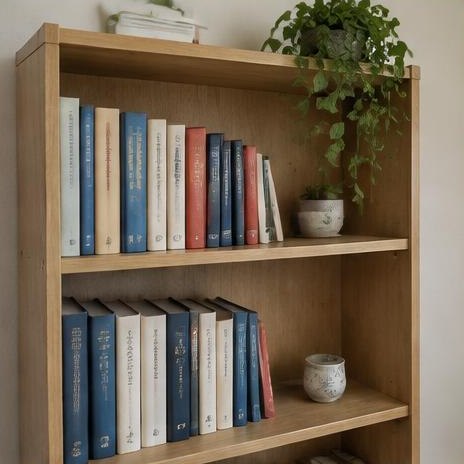
Books are printed volumes requiring decisions about ownership and destination during hoarding clearance. They may be everyday reading material, reference works, gifts, personal records or parts of a deliberately assembled collection. Similar-looking shelves can contain very different interests and responsibilities, including borrowed volumes and books with private papers inside. Assessing books therefore involves more than estimating how many boxes they might fill. The useful questions concern which books are present, who can decide about them, what should stay together and which destinations are realistic.
Identifying ownership before choosing destinations
A book's presence in a property does not establish who owns it. Volumes may belong to another household member, have been borrowed from a friend or form part of a collection managed on someone else's behalf. Inscriptions and labels can offer clues, but they may also reflect a previous owner rather than the current one. Ask how uncertain ownership will be recorded before a destination is approved.
For example, a shelf of gardening titles might contain a neighbour's reference book among books purchased by the resident. Removing the whole shelf under one instruction could overlook that difference. A separate note for the borrowed volume makes the decision more precise.
Where ownership is disputed or connected with an estate, ask about applicable permissions and seek appropriate professional advice. Providers should understand which person can approve each relevant group, rather than assuming that whoever arranged the appointment owns every volume.
Recognising collections and meaningful groups
Books sometimes make sense as groups rather than individual objects. A complete series, a run of local histories or volumes with shared annotations may lose useful context if divided casually. Other shelves may simply reflect where books fitted, with no intended connection between them. The person familiar with the collection can help explain which distinctions matter.
For example, twelve similar volumes might form a complete reference set, while the neighbouring twelve are unrelated novels. Ask the provider how the set would be identified and kept together through review and transport. A short description of the title sequence may be more helpful than an instruction to retain “the matching books”.
Personal significance also deserves explicit recording. A heavily used paperback may matter more to its owner than an elaborate edition. Avoid allowing appearance alone to determine which books receive attention or are assumed to have value.
Ready to discuss your clearance? Request a free quote or call us to talk through your requirements.
Deciding how much detail to record
An inventory should support decisions rather than become an unnecessary project of its own. Some collections need individual title records; others can be described accurately by shelf, subject or agreed group. The appropriate detail depends on ownership questions, personal significance, possible specialist interest and the destinations being considered. Ask what the provider's proposed record will actually help establish.
For example, a collection of signed local histories might warrant title-by-title notes, while a group of ordinary travel guides could be recorded together if the owner agrees. If only selected books are to remain, the record needs enough detail to distinguish those copies from similar editions.
Photographs can support identification, but ask whether titles will be readable and whether private inscriptions might be visible. A broad photograph of a bookcase may document its appearance without providing enough information to authorise removal of particular books.
Considering sale without assuming value
Age, size and decorative bindings do not by themselves establish a book's sale value. Edition, completeness, condition, subject interest and demand may all be relevant. Where there is a credible reason to seek a specialist opinion, ask who would provide it, what information they need and whether any assessment or selling arrangement carries costs or conditions.
For example, two copies of the same novel might look similar but have different publication details. A provider should not promise that either copy is valuable based only on its cover. Conversely, an unfamiliar technical title should not automatically be dismissed because it lacks decorative appeal.
Clarify whether a proposed service includes identifying books for possible sale, arranging an independent opinion or actually selling them. These are different tasks. Record who approves any offer and what happens to books that attract no interest, rather than leaving their destination unresolved.
Checking realistic donation and reuse routes
A wish to pass books on is not the same as confirmed acceptance. Potential recipients may have limits concerning subject, condition, quantity or available storage. Some may accept individual reading copies but not large sets or dated reference material. Ask providers how acceptance is checked and whether the proposed recipient knows the approximate quantity and type of books involved.
For example, a household might hope to donate several boxes of language textbooks. Before that destination becomes part of the agreement, someone should confirm whether the intended recipient wants those editions and can accommodate the volume. If not, another approved route will be needed.
Books with handwritten notes or dedications may still be meaningful to the owner even when another recipient would accept them. Destination decisions should therefore combine practical acceptance with permission from the person authorised to decide. Avoid treating donation as automatically suitable for every unwanted volume.
Asking about weight, access and condition
Books can create substantial handling demands, especially when many volumes are stored upstairs or in tightly filled rooms. Ask the provider how they assess quantities, carrying routes, stairs and suitable transport arrangements. If shelving appears unstable or access is restricted, ask whether further assessment is needed before work can be agreed. These are provider questions, not invitations to rearrange uncertain stacks yourself.
For example, a room might contain books on shelves as well as piles behind the door. Photographs from the doorway may not show the full quantity or the available route. A provider should explain whether a visit is needed to establish a workable scope.
Condition also affects potential destinations. Ask how damp-affected books, strong odours or visible signs of pests would change handling and acceptance arrangements. A recipient's willingness to take ordinary reading copies should not be assumed to cover books with additional condition concerns.
Protecting papers and information inside books
Books frequently contain more than printed pages. Letters, photographs, receipts and handwritten notes may have been used as bookmarks or stored deliberately. Inscriptions can also reveal personal information. Before removal, agree whether checking for enclosed material forms part of the service, how extensive that check will be and what happens when something is found. Do not assume every page will be examined unless that task has been specifically discussed.
For example, an address book might be concealed among similarly sized novels, or a family photograph could be tucked inside a cookbook. The agreed process should distinguish the volume's destination from the treatment of material discovered within it.
Ask who receives sensitive finds and how they are recorded without unnecessarily sharing their contents. If a large collection makes a detailed review impractical within the proposed scope, the provider should explain the limitation so an informed decision can be made.