Last updated
On this page
- Agree how sensitive belongings will be handled
- Gather records needed for everyday affairs
- Create a private holding place
- Preserve photographs and their context
- Keep jewellery and small valuables identifiable
- Check places where papers can be overlooked
- Protect information stored on devices
- Confirm arrangements for confidential paperwork
- Record the handover without exposing private details
- Record handovers without exposing private details
- Keep access devices distinct from ordinary objects
- Recognise when specialist advice would help
- Use a calm process when something cannot be located
Documents and valuables can be easy to overlook during a clearance, particularly when they are tucked inside furniture, mixed with correspondence or stored in unfamiliar packaging. A careful approach protects privacy as well as belongings with personal significance.
This guide focuses on personal records, photographs, jewellery and sensitive information. It does not offer valuation or legal advice. Before removal begins, agree how these belongings will be identified, protected and handed over, rather than relying on assumptions about what a clearance provider will recognise.
Agree how sensitive belongings will be handled
Start by identifying who can answer questions about documents and valuables. This might be the person whose belongings are involved, or someone they have authorised to help. Where authority is uncertain, leave decisions about the affected belongings unresolved until clarification is available.
Ask your chosen provider:
- Can documents, photographs and possible valuables be set aside rather than included in general removal?
- Who should receive them?
- How will staff raise a question without sharing private information unnecessarily?
- Can removal from an affected area pause while an uncertain item is checked?
Record the agreed approach in straightforward language. Avoid instructions such as “remove everything in the drawers” if their contents have not been reviewed.
If the person wants privacy while looking through papers, ask whether work can be arranged around that preference. Having support available should not mean other people automatically read personal correspondence or make decisions on their behalf.
Gather records needed for everyday affairs
Look for records that may be needed to manage current affairs: identity documents, account correspondence, insurance information, pension paperwork, housing records and appointment letters. Include documents relating to accessibility arrangements, ongoing support or communication preferences where relevant.
The aim is to make necessary information accessible, not to decide how long every record must be retained. If a document’s significance is unclear, set it aside for advice from the relevant organisation or a suitably qualified adviser.
Keep related papers together where their order provides context. A letter may make more sense alongside its envelope, supporting paperwork or later correspondence. Avoid removing attachments simply to make a folder look neater.
Ask the provider whether folders and document boxes can remain intact during handling. Before clearance starts, make sure important papers are somewhere the person can reach afterwards, rather than buried inside packed belongings or placed in an inaccessible storage area.
Ready to discuss your clearance? Request a free quote or call us to talk through your requirements.
Create a private holding place
Choose a designated place for documents and valuables awaiting collection or review. Where possible, use a secure area separate from the removal route, with access limited to people who need it. Avoid leaving sensitive papers on shared landings, windowsills or open work surfaces.
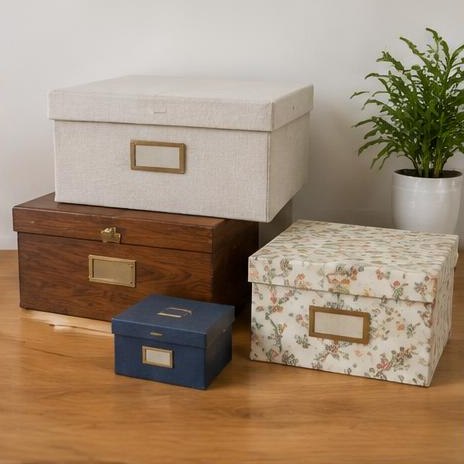
Use folders, envelopes or suitable containers to keep papers together. Label the outside with a neutral description, such as “personal records”, rather than an account number, medical detail or full identity information.
Ask the provider how the agreed holding area will be distinguished from belongings intended for removal. A clearly communicated boundary is more dependable than assuming a closed box will be left untouched.
Discuss who will oversee belongings if the property is temporarily unattended. If secure storage is unavailable, consider arranging for an authorised person to hold them elsewhere. Do not disclose the location of valuables in notes that will be widely circulated.
Preserve photographs and their context
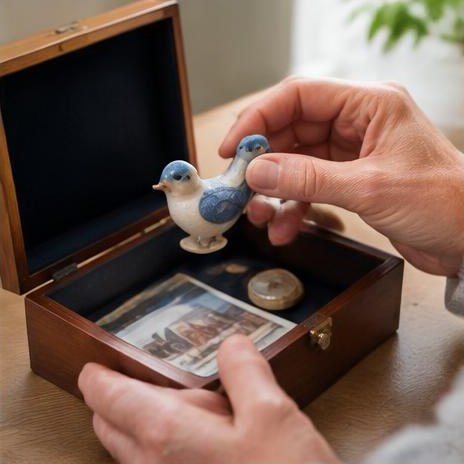
Photographs can carry information that is not obvious from the image alone. Names on the reverse, handwritten album captions and accompanying letters may explain who is pictured or why an occasion mattered.
Keep albums intact where practical. Avoid pulling photographs from mounts, separating stuck pages or trying to repair damaged pictures during the clearance. If photographs appear fragile, ask an appropriate preservation specialist about handling before disturbing them.
Group loose photographs with the envelopes or notes they were found alongside. Use a brief location note if their original position may help someone identify them later. Avoid writing directly on photographs.
Ask the provider whether albums, negatives, slides and digital photo storage can be treated as a separate category for review. If family members want copies, agree who will arrange that and how images will be shared. Private photographs should not be circulated simply because other belongings are being discussed.
Keep jewellery and small valuables identifiable
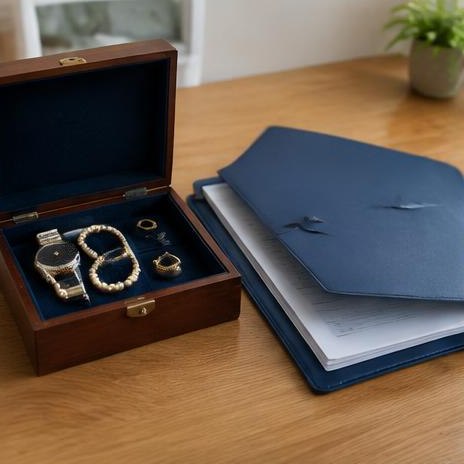
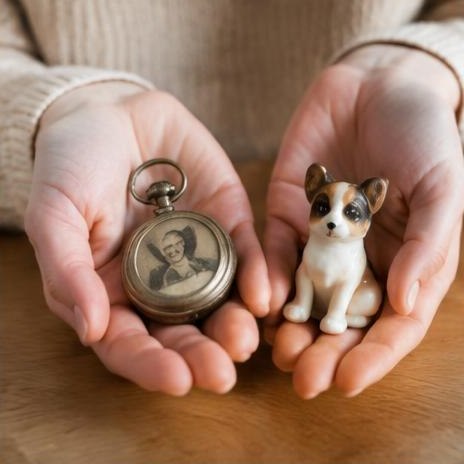
Jewellery, watches and other small valuables may be stored in ordinary containers rather than dedicated cases. Check the contents of pouches, envelopes and small boxes before deciding what happens to the container.
Keep associated receipts, certificates, repair records and original packaging with the relevant item where possible. These may help identify belongings, but their presence does not establish authenticity or value.
Use a simple description when recording an item: its appearance, markings and where it was found. Avoid guessing at materials or describing something as valuable based only on appearance. If photographs are useful for identification, keep them private and avoid including unrelated personal information.
Ask the provider how possible valuables discovered during removal would be set aside and handed over. Do not assume identification, appraisal or specialist transport is included. If you need valuation advice, arrange it separately with an appropriate professional rather than asking the clearance team to estimate worth.
Check places where papers can be overlooked
Personal records and small belongings often sit within other objects. Before furniture or containers leave, check ordinary storage spaces such as drawers, writing desks, filing boxes, coat pockets and bags. Look inside books or magazines that may have been used to hold letters, photographs or cash.
These checks should stay within what is safely accessible. Do not dismantle furniture, reach into unstable stacks or move heavy items simply to search for documents. Ask the provider how accessible contents can be checked without putting anyone at risk.
Take care with envelopes that appear empty and folders whose labels no longer match their contents. Old packaging can contain newer paperwork.
Agree what happens if something is discovered after removal has started. Ask who will be contacted, how the item will be kept separate and how its return would be arranged. Confirm the process rather than assuming a later search will be possible.
Protect information stored on devices
Personal information may be held on phones, computers, tablets, memory cards, removable drives and digital cameras. Labels such as “old laptop” do not tell you whether a device contains photographs, financial records or access to current accounts.
Keep devices awaiting review out of general removal. Include accessories needed to identify or access them, but keep written passwords and recovery information private.
Before a device leaves your control, establish whether wanted files have been copied somewhere accessible and whether an appropriate data-removal process has been completed. If you are unsure how to do this, seek suitable technical support. Deleting visible files or resetting a device without checking the process may not address every privacy concern.
Ask the provider whether handling data-bearing devices is within the proposed service, and what arrangements would apply. Do not assume general clearance includes data recovery or secure data removal. Agree any specialist work separately before authorising transfer.
Confirm arrangements for confidential paperwork
Sensitive paperwork can include bank correspondence, health information, employment records, signatures and documents containing identity details. Once you have decided that particular papers are no longer needed, keep them separate from material going through ordinary removal routes.
Ask your chosen provider:
- Is confidential document destruction available, or would it need to be arranged separately?
- How are papers contained and protected before destruction?
- Who handles them after collection?
- What confirmation, if any, can be supplied afterwards?
These are matters to establish in advance, not benefits to assume are included. If the answers are unclear, retain the papers while you arrange a suitable alternative.
Avoid displaying readable documents in clearance photographs or sending entire pages when a general description would answer a question. If an image is necessary, cover unrelated identifying information first. Check the background too: open letters and labels can reveal details unintentionally, even when they are not the main subject.
Record the handover without exposing private details
A handover record can help everyone understand what has been found and where it has gone. Keep it proportionate: a neutral description, the receiving person and the agreed destination may be enough for practical tracking. Avoid copying account numbers or document contents into a general clearance record.
For jewellery or other small belongings, ask whether the receiving person can check the item against its description at handover. For records, note whether a folder or container was transferred intact rather than listing every private document.
Confirm who will take responsibility for any belongings still awaiting review. Do not let a container marked “check later” become part of the outgoing load because nobody knows whose decision is needed.
Before the work concludes, revisit the agreed holding place and any areas left pending. Ask whether anything further was discovered during removal and confirm how outstanding questions or transfers will be followed up.
Record handovers without exposing private details
When documents or valuables move between people, a brief handover record can prevent uncertainty about their whereabouts. Record the container or item reference, the person receiving it and the agreed purpose of the transfer. There is usually no practical need to copy account numbers or describe intimate correspondence in a general clearance record.
Ask the intended recipient to check the description while the handover takes place. If a sealed folder has not been reviewed, describe it as such rather than listing assumed contents. A record should distinguish what was observed from what someone believes may be inside.
Where several relatives or representatives are involved, agree a single method for recording transfers. Separate informal notes can become difficult to reconcile. Keep access to the record proportionate, and avoid circulating photographs of identity documents or valuables simply to show that they have been found.
Keep access devices distinct from ordinary objects
Keys, entry fobs, security tokens and small storage devices can appear insignificant while controlling access to a home, account or important information. Set them aside for an authorised person to identify. Do not label a key with a full address if a neutral reference will serve the same purpose.
Digital devices may contain photographs, financial records or correspondence that do not exist elsewhere. Before agreeing to removal, establish who can decide what happens to the information and whether specialist assistance is needed. Possession of a device should not be treated as permission to open accounts or read its contents.
Ask whether original chargers, cables and associated notes should stay together while the owner reviews the device. Avoid trying unfamiliar passwords or switching on damaged equipment to identify files. Physical custody, permission to access information and permission to dispose of the device are separate matters that should remain distinct.
Recognise when specialist advice would help
An item’s appearance is not a reliable guide to financial or historical significance. Coins, medals, signed papers and objects with accompanying receipts may warrant review, but the clearance process should not become an improvised valuation exercise. Keep associated information together so an appropriate adviser can consider the context.
Where valuation is wanted, ask about the adviser’s relevant experience, fees and any interest in purchasing the item. An offer to buy and an independent valuation serve different purposes. There is no need to accept an immediate offer simply because other clearance arrangements are under way.
Before arranging an assessment, consider:
- Who has authority to request advice or approve a sale?
- Can the assessment begin without moving the item?
- What identifying record is appropriate before a transfer?
- Who will hold the item while advice is pending?
- How will any proposed fees be agreed?
Avoid marking, polishing or attempting repairs before advice where doing so could affect the object or its evidence of origin.
Use a calm process when something cannot be located
If an expected document or valuable is missing, first check whether it was actually recorded as present. Recollection, an old photograph and a current inventory provide different kinds of information. Review the agreed holding areas and handover records before assuming an item has left the property.
Ask the provider whether movement from the relevant area can pause while the position is checked. Give a precise description without sharing unnecessary private details. Note when the item was last seen and which containers or locations have already been reviewed, so searches do not become repetitive or intrusive.
For missing identity papers, access devices or financial information, contact the relevant issuing organisation for advice about protective steps. If there is evidence suggesting theft, consider reporting it to the police. Keep observations separate from allegations, and preserve useful records while the circumstances are clarified.