Last updated
On this page
- Establish which recycling route applies
- Check local rules before preparing materials
- Agree a practical separation plan
- Ask specific questions about paper and cardboard
- Distinguish packaging from other glass, metal and plastic
- Keep electrical equipment and batteries identifiable
- Clarify routes for textiles and mixed-material items
- Protect separated materials while awaiting collection
- Ask what happens after removal
- Check whether an item should remain intact
- Protect personal information before equipment leaves
- Distinguish a proposed route from a confirmed outcome
- Prepare a fallback for uncertain materials
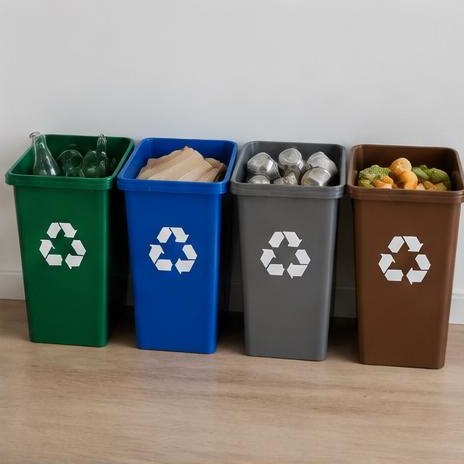
Recycling during a clearance starts with understanding what materials are present and where they can actually be accepted. A familiar recycling symbol does not settle every local question, and different collection routes may have different requirements. Before separating items, ask your chosen provider what preparation is useful, which materials need individual arrangements, and how they can explain the intended recycling routes.
Establish which recycling route applies
Could the materials use a council collection, a household recycling centre, a specialist collection, or a route arranged by your clearance provider? Ask which option is appropriate before preparing everything around the rules for your usual household bin.
Local household services and clearance collections may have different acceptance arrangements. Could your provider explain whether they would deliver materials themselves, use another operator, or expect you to make any separate arrangements? Who would confirm that the receiving site accepts those materials from that type of collection?
Useful questions include:
- Is this material accepted through the proposed route?
- Does its condition or construction affect acceptance?
- Does the receiving site require advance booking or approval?
- Are there access restrictions relevant to the vehicle or person delivering it?
Avoid assuming that something accepted from a resident will also be accepted through a commercial clearance route. Could the provider check this distinction before collection rather than leave the destination uncertain?
Check local rules before preparing materials
Could your provider identify which local guidance applies to the property and which receiving site they expect to use? Recycling arrangements can vary between council areas, so advice from a previous address may not fit your current collection.
Ask about the material itself rather than relying only on the name of the object. For example, would a plastic container be accepted because of its material and shape, or excluded because of what it previously held? Does the site treat packaging differently from durable plastic objects?
Would photographs of labels, packaging symbols or the overall item help the provider check acceptance? These can support an enquiry, but ask whether an uncertain item needs assessment in person.
If council guidance and the provider’s instructions appear different, could they explain why? The difference may relate to their receiving facility rather than your household collection. Seek a clear answer before changing how you prepare the materials.
Ready to discuss your clearance? Request a free quote or call us to talk through your requirements.
Agree a practical separation plan
Which materials does your chosen provider want kept apart, and which can travel together? Separating everything into detailed categories may create unnecessary handling if the receiving facility uses a different system. Equally, combining materials without checking could make an intended recycling route unsuitable.
Could you agree clear labels for the groups the provider actually accepts? Ask whether labels should describe the material, such as cardboard or metal, or identify a special collection stream, such as electrical equipment.
Confirm the practical details:
- Should materials be loose, boxed or placed in another agreed container?
- Are bags accepted, and must their contents remain visible?
- Should lids, attachments or packaging stay with the main item?
- Where should uncertain items wait while their route is checked?
Would a simple written list help everyone follow the same arrangement? Keep separation focused on confirmed requirements, rather than creating categories based on appearance alone. Ask before opening sealed packaging or taking objects apart.
Ask specific questions about paper and cardboard
Paper and cardboard need more than a general “paper recycling” label. Could your provider distinguish between ordinary packaging, coated paper, laminated materials, padded envelopes and packaging with attached plastic or foil? Items that look similar may need different handling.
Should cardboard packaging be flattened, and should tape, staples or windows remain attached? Ask what the receiving route requires rather than spending time removing every small component without a reason.
For packaging affected by food, oil, moisture or other residues, could the provider confirm whether it remains acceptable? Ask about the particular condition instead of assuming that all cardboard can enter the same collection.
Does shredded paper have a separate acceptance rule or containment requirement? If paper contains personal information, address privacy before considering its recycling route; acceptance for recycling does not establish secure handling.
Could paper awaiting collection be kept dry without obstructing access? Confirm suitable storage and containers, particularly if collection arrangements are still being agreed.
Distinguish packaging from other glass, metal and plastic
Would your provider separate bottles and jars from other glass items? Drinking glasses, mirrors, window glass and heat-resistant glass should not be assumed to follow the same route as glass packaging. Ask which category applies and whether specialist arrangements are needed.
For metal, could they distinguish between packaging, larger metal objects and items containing other materials? A metal appearance alone does not establish that the whole object belongs in a metal collection.
Plastic needs similarly specific questions. Could the provider confirm acceptance by object type as well as any material marking? Ask separately about rigid packaging, flexible wrapping, garden items and mixed-material products.
What preparation is expected for containers, lids and attached components? Could remaining contents affect acceptance? Seek instructions before handling unfamiliar substances, pressurised containers or damaged glass. Do not break objects to make them fit a container; ask the provider how awkward or fragile items should be presented safely.
Keep electrical equipment and batteries identifiable
Could your provider confirm which items count as electrical equipment for their collection route? Include objects that use plugs, batteries or charging cables, even where the electrical function is not obvious. Ask whether accessories should remain with the main device.
How should batteries be identified for collection, including those built into equipment? Do not assume they belong with general metal or packaging. Could the provider explain whether battery-powered items need a separate collection arrangement?
If a battery or device appears damaged, swollen, leaking or unusually hot, avoid handling or attempting removal. Contact the provider for appropriate guidance; where there is an immediate danger, seek emergency assistance.
Does the proposed route accept lamps, screens and appliances together, or do they require distinct arrangements? Ask before moving heavy equipment or disconnecting fixed appliances.
For devices that may hold personal information, could you establish the data-handling arrangements separately? A recycling destination alone does not answer questions about access to stored information.
Clarify routes for textiles and mixed-material items
Could your provider identify a recycling route for textiles that are not being considered for continued use? Ask which fabrics and item types are accepted, and whether condition affects eligibility. Do not assume a collection point accepts every textile simply because it accepts clothing.
For carpets, upholstered furniture, mattresses and other bulky items, what does the proposed receiving facility accept? Could the provider explain whether the whole item is accepted for processing or whether only particular components have an available route?
Mixed construction deserves a specific enquiry. Would attached foam, fabric, timber, metal or plastic change the destination? Ask whether separation is required and who would carry it out. Avoid dismantling bulky objects simply to expose potentially recyclable parts.
Could the provider distinguish between a material that is technically recyclable and an item for which they have an accessible recycling route? That distinction is more useful than a broad assurance that a product contains recyclable materials.
Protect separated materials while awaiting collection
Where could separated materials wait without blocking doorways, stairs or essential access? Ask your provider whether the collection team needs items in their existing locations or at an agreed collection point. Do not assume you must move heavy or awkward items yourself.
Could the provider recommend suitable containment for loose materials without making unsupported promises about what they will collect? Confirm whether containers will be taken away, emptied or left behind, and whether packaging around the materials affects acceptance.
Would exposure to rain or contact with other materials change the intended recycling route? Ask which groups need protection and whether an indoor storage arrangement is appropriate.
Keep unidentified substances and potentially hazardous items out of ordinary material groups while seeking advice. Could photographs or a description help the provider decide what specialist input is needed?
Before collection, can everyone involved recognise the agreed labels? Clear identification can help prevent carefully separated materials being combined unintentionally during loading.
Ask what happens after removal
Could your provider describe the intended destination for each agreed recycling stream? A useful explanation should distinguish between collection, sorting and the later processing of materials. Removal from the property is not, by itself, evidence that an item has been recycled.
Ask what information they can provide about the receiving facility and any onward handling. If destinations depend on acceptance checks, could they explain that uncertainty before collection?
Questions worth confirming include:
- What collection or transfer records, if applicable, will be available?
- Do those records identify a destination, or also confirm processing?
- What happens if the receiving facility rejects a material?
- Will you be told if the intended route changes?
Could the provider explain the basis for any recycling claim they make? Avoid treating an estimated destination as a confirmed outcome. Where no suitable route has been established, ask for a straightforward explanation rather than assuming that every separated material will ultimately be recycled.
Check whether an item should remain intact
Recycling does not always begin with dismantling. An electrical item, upholstered chair or composite fitting may contain components that require different treatment, but separating them at home is not necessarily helpful or safe. Ask the receiving operator whether the whole item should be presented intact before removing anything.
Built-in batteries deserve particular attention. If a device is swollen, leaking, hot or visibly damaged, stop handling it and obtain appropriate advice. Do not put an uncertain battery into a general collection merely because it is small. Explain its condition when asking about a suitable collection route and any storage precautions.
The same caution applies to pressurised containers and items with unknown contents. A container that appears empty may still need specific handling. Do not puncture, crush or decant it to make it easier to recycle. Ask for instructions based on the actual item rather than its outer material alone.
Protect personal information before equipment leaves
Recycling a device and protecting its data are separate tasks. Phones, tablets, computers and some connected household equipment can contain account details or stored information. Before release, consider what needs to be backed up and whether you have the authority to access or erase the device.
Deleting visible files is not necessarily the same as removing recoverable data. Seek guidance appropriate to the device and your privacy needs. If equipment no longer powers on, ask about suitable data destruction options instead of assuming that the information has become inaccessible.
Account access can also affect devices intended for reuse. Ask whether sign-out procedures, activation locks or memory cards need attention before handover. Keep passwords out of clearance instructions and do not attach them to equipment. Where another person owns the device, involve them in these decisions wherever possible.
Distinguish a proposed route from a confirmed outcome
A statement that materials will be taken for recycling describes an intention, not necessarily the final treatment of every component. Ask how the provider distinguishes items sent for sorting from materials actually accepted for recycling. Clear wording helps you understand what evidence can reasonably be supplied afterwards.
For collections involving several material types, ask whether the explanation can identify their separate destinations or treatment routes. Some information may concern a combined load rather than your individual belongings. Clarify that limitation before requesting documentation that an operator may be unable to produce.
Questions worth raising include:
- Which receiving operator is expected to accept these materials?
- What happens if part of the load is rejected?
- Will another organisation sort or process it later?
- What collection or transfer records can be provided?
- Does any reported outcome refer to this collection or wider operations?
Keep environmental claims proportionate to the evidence. A broad statement about a provider's activity does not establish the outcome for a particular sofa, appliance or bag of textiles. Ask for a plain explanation where wording is unclear, without expecting an unsupported guarantee that every item will become a new product.
Prepare a fallback for uncertain materials
Acceptance can remain uncertain where an item has mixed construction, missing identification or damage that is difficult to assess remotely. Agree what should happen if the planned route proves unsuitable. This might mean leaving the item pending advice or seeking a separately confirmed collection, rather than adding it to another stream.
Avoid making preparation irreversible before acceptance is confirmed. Cutting materials apart, combining powders or removing identifying labels can make later assessment harder. Retain useful packaging information where available, and tell the provider if the contents may differ from what the label suggests.
If materials will remain at the property, discuss a suitable temporary location that does not obstruct access or expose people to avoidable risks. Do not accumulate uncertain items indefinitely while waiting for an ideal recycling option. Seek practical advice on an appropriate route, recognising that safe handling and an accurately described outcome matter more than an unverified recycling claim.