Last updated
On this page
- Start with the donation outcome you want
- Confirm consent before anything is transferred
- Ask recipient organisations what they currently accept
- Check suitability without trying to make items qualify
- Agree who will arrange collection or delivery
- Plan for refusal before the item leaves
- Keep donation records proportionate and private
- Confirm the handover and respect recipient boundaries
- Plan the handover after provisional acceptance
- Keep packages useful and identifiable
- Remove personal information before transfer
- Record the outcome without assuming financial benefits
Start with the donation outcome you want
Donation is about offering belongings to an organisation that can use them, with the owner’s agreement. It is not a promise that everything offered will be accepted. A useful opening question for your chosen clearance provider is: “Can you help us explore donation options without treating acceptance as confirmed?”
Think about what matters to the person whose belongings are involved. Would they prefer a local cause, a particular type of recipient, or simply an organisation willing to consider the items? Ask whether those preferences can be recorded before any arrangements are discussed.
It also helps to ask:
- Can items intended for donation remain separate from belongings authorised for other clearance routes?
- Can you explain which arrangements we would need to make directly with the recipient?
- Will you check with us if the preferred organisation cannot accept an item?
- Can we agree a fallback that does not automatically authorise another destination?
Keep the conversation focused on suitable recipients and agreed transfers. Deciding whether someone wants to part with a possession belongs before the donation arrangements, not at the point of loading.
Confirm consent before anything is transferred
Ask your provider how they will confirm permission before belongings leave for a recipient organisation. Consent to discuss donation, request photographs or seek an assessment should not be treated as consent to transfer ownership.
Where belongings are shared, inherited or being handled on someone else’s behalf, ask: “What confirmation do you need about who can authorise this donation?” If that is unclear or disputed, pause the proposed transfer and seek appropriate advice rather than asking the clearance team to decide.
Useful questions include:
- Can we identify the specific items approved for donation in writing?
- Can the owner approve the proposed recipient before collection or delivery?
- How can we flag anything that must remain untouched?
- Who should you contact if someone changes their mind before handover?
Ask for permission to be checked again if the proposed destination changes. Agreement to donate to a community project does not necessarily mean agreement to transfer the same belongings elsewhere.
Avoid relying on silence, family assumptions or an item’s location as evidence of permission. A clearly recorded decision gives everyone a practical reference during the removal arrangements.
Ready to discuss your clearance? Request a free quote or call us to talk through your requirements.
Ask recipient organisations what they currently accept
Approach potential recipients before arranging transport. Ask whether they are currently considering the type of item offered, rather than relying on an old leaflet or previous experience.
Your chosen provider may be able to discuss possible routes, but ask who will contact the organisation and obtain its response. Keep any tentative suggestion separate from confirmed acceptance.
Questions for the recipient could include:
- Are you currently accepting this category of item?
- Are there condition, material, size or labelling requirements?
- Would photographs help you assess whether it might be suitable?
- Is acceptance decided in advance, or only after inspection?
- Do you accept donations from clearance providers acting with the owner’s permission?
Make the description specific. “Furniture” may not give the recipient enough information, whereas the item type, construction, condition and relevant labels can support a useful response.
Ask whether the organisation wants donations for resale, direct distribution or another purpose. This can help you understand its requirements without assuming that a worthwhile cause can use every offer. If it declines, respect that answer and explore another option only with the owner’s agreement.
Check suitability without trying to make items qualify
Ask the recipient what information it needs about condition and completeness. Be open about wear, damage, missing components, odours or anything else that could affect acceptance. Photographs should represent the item as it is.
For upholstered furniture, ask whether particular labels need to be present and readable. For electrical items, ask about the recipient’s assessment arrangements and whether it accepts that item type at all. Do not attempt repairs, dismantling or testing to meet a requirement you have not confirmed.
Other useful questions are:
- Do you need accessories, instructions or fittings with the item?
- Are there product categories you do not accept?
- Are there restrictions involving product recalls or safety information?
- Would you prefer us to leave the item untouched until you have assessed it?
Ask your clearance provider whether it can keep components together without altering the item. If preparation is requested, clarify who would undertake it and whether that falls within the proposed arrangements.
A recipient’s refusal is not a judgement about the person offering the belongings. It may simply mean that the item does not fit what that organisation can receive.
Agree who will arrange collection or delivery
Once a recipient has expressed interest, ask how the item could reach it. Possible arrangements might involve the organisation’s own collection, delivery arranged by the donor, or transport discussed with a clearance provider. None should be assumed available.
Ask your chosen provider:
- Would transporting an accepted donation be within the work you are proposing?
- Who would book the receiving appointment and confirm access details?
- Are there transport or handling charges we should understand before agreeing?
- What happens if the recipient changes the appointment or cannot receive the item?
Ask the organisation where deliveries should arrive and whether someone needs to be present to accept them. Confirm any requirements for packaging, access or unloading before the removal is booked.
Describe stairs, restricted access and awkward items so that suitable handling can be discussed. Ask who will assess access and arrange handling, rather than attempting difficult lifting yourself.
Make the distinction between collection and acceptance explicit. Ask: “Does booking a collection mean the item has been accepted, or could it still be declined when seen?” That answer affects the fallback arrangements you need to approve.
Plan for refusal before the item leaves
Even after an encouraging conversation, acceptance may remain conditional. Ask your provider and the recipient what would happen if an item were declined at collection or delivery.
A useful question is: “Can we agree that an unsuccessful donation attempt does not authorise a different transfer or clearance route?” Ask how that instruction would be recorded and communicated to whoever handles the item.
Clarify:
- Who will contact the owner if acceptance changes?
- Can the item remain where it is while a decision is made?
- If it has already been transported, what return arrangements could be considered?
- Would an unsuccessful delivery involve charges?
- Will you ask before approaching a different recipient?
Do not leave donations outside an organisation’s premises without explicit agreement. Ask about its receiving arrangements instead, including what to do if the agreed contact is unavailable.
If there is no workable fallback, consider postponing removal until the uncertainty is resolved. A recipient’s interest can be useful without being enough to justify transport. Keeping the next step conditional protects the owner’s choice and avoids making an unapproved destination the default.
Keep donation records proportionate and private
Ask what written confirmation would help everyone identify the agreed items, recipient and transfer arrangements. This might be an item description, correspondence about acceptance and a record of the owner’s permission. Ask your provider what it can supply rather than assuming a donation receipt is included.
Before sharing photographs, check whether they reveal addresses, family photographs, paperwork or other private details. Ask whether closer images of the item would be sufficient. Permission to donate a possession is not permission to share unrelated personal information.
For devices that may contain personal data, ask the recipient what preparation it requires and seek suitable support before transfer. Keep the donation on hold if privacy questions remain unresolved.
If Gift Aid is mentioned, ask the recipient organisation to explain its process, eligibility requirements and what the donor would be agreeing to. Do not assume that a clearance provider can make that declaration on someone’s behalf.
For handover records, ask:
- Can the recipient acknowledge what it receives?
- Who will receive that acknowledgement?
- What information will be retained, and by whom?
- Can we avoid including personal details that are unnecessary for the arrangement?
Confirm the handover and respect recipient boundaries
Before the agreed handover, ask whether the recipient’s acceptance conditions and receiving arrangements are still current. Confirm that the owner’s instructions have not changed and that the items being transferred match what was discussed.
Ask your provider: “How will you distinguish approved donations from belongings that are staying or awaiting a decision?” Clear identification should support consent, not replace it.
At handover, ask who will record any differences between what was offered and what was accepted. If an item is declined, return to the agreed contact and fallback process rather than improvising.
Afterwards, ask what confirmation is available. An acknowledgement of receipt may be different from proof of resale or distribution. If the eventual use matters to the donor, discuss that with the organisation before transfer.
Avoid attaching conditions that the recipient has not accepted. Ask whether it can accommodate any request about use, onward transfer or publicity. If it cannot, the owner can decide whether to proceed. Donation works best when the donor’s permission and the recipient’s boundaries are both understood.
Plan the handover after provisional acceptance
Once a recipient has expressed interest, turn that response into a practical handover plan. Confirm the collection or delivery address, the contact person and whether an appointment is needed. An expression of interest is not necessarily a reserved space, particularly if the organisation still needs to inspect the belongings on arrival.
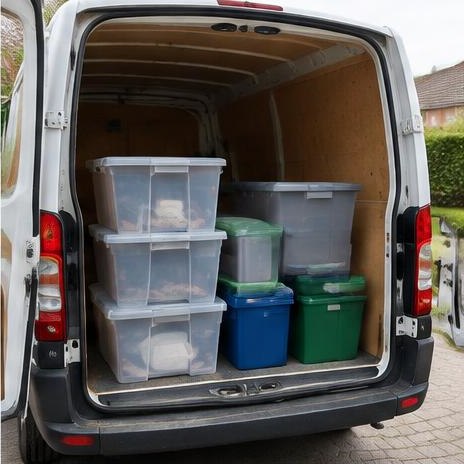
Ask where responsibility for transport sits. If a clearance provider is taking the items, check whether the recipient knows that someone other than the owner will arrive. The driver may need an item list or reference so that staff can connect the delivery with the earlier conversation.
Avoid placing belongings outside while waiting unless the arrangements specifically allow it and the location is suitable. Exposure to weather or an unattended handover could affect whether the recipient can use them. Discuss where items can remain safely until collection, without obstructing routes needed by the household.
Keep packages useful and identifiable
Packing should help the recipient recognise and handle what has been offered. Ask whether books, textiles, kitchenware or small household items should be boxed separately. An organisation may have its own preferences, so a little clarification before packing can prevent unnecessary unpacking and rearrangement later.
Label packages by their contents rather than by private household information. There is usually no practical reason to write the owner's circumstances on a box. Where a package contains several parts of one item, identify that connection so that accessories do not become separated during transport.
A simple handover checklist can cover:
- The number of packages and larger individual items.
- Any accessories travelling with a particular item.
- The recipient's reference or named contact.
- Instructions for items awaiting a final acceptance decision.
Choose manageable containers and ask the person transporting them about suitable packing. Do not overfill boxes or conceal sharp edges among soft items. If something needs specialist handling, describe it before arranging transport rather than relying on a warning at the doorstep.
Remove personal information before transfer
Donation can unintentionally transfer information as well as possessions. Books may contain letters, handbags may hold identification, and drawers may contain financial paperwork. Build in an owner-approved check for these materials before packages are closed, keeping anything uncertain aside for a private decision.
Digital devices require separate attention. Deleting a visible file or signing out of one application may not address everything stored on a device. Ask a suitable technical adviser about removing personal information and account connections for the particular equipment. If that cannot be resolved, postpone the donation rather than pass on a device with uncertain contents.
Check ordinary household objects too. Address labels, engraved details, framed certificates and storage media can identify someone even when the item itself has little monetary value. The owner should decide whether those details are acceptable to share. A recipient's willingness to accept an object does not resolve that privacy question.
Record the outcome without assuming financial benefits
After the handover, note what the recipient actually accepted. If some packages return, update the household's record so they are not mistakenly treated as already transferred. Keep any acknowledgement alongside the item list, while recognising that the organisation may not provide a detailed receipt for every object.
If a charity mentions Gift Aid or another fundraising arrangement, ask it to explain the process and any eligibility requirements directly. Donating goods should not be treated as automatically creating a tax benefit or a particular sale value. Do not complete a declaration on another person's behalf without appropriate authority.
For items awaiting another destination, agree a review point with the owner rather than repeatedly moving them between rooms. A completed donation plan should leave a clear record of what was accepted, what remains and which decisions are still open, without pressuring anyone to authorise a different route.