Last updated
On this page
- Key Takeaways
- The Initial Assessment: Preparing for Clearance
- Steps to Clear a Hoarded Property
- Navigating Emotional Challenges
- Professional vs DIY: Which is Right for You?
- Legal and Environmental Responsibilities in the UK
- Advanced Insights: Structural and Health Considerations
- Checklist: Reclaiming Your Property
- Common Misconceptions About Hoarding Clearance
- Financial Considerations and Probate
Reclaiming a property from the effects of chronic accumulation is a significant undertaking that requires a structured, compassionate, and professional approach. Understanding how to clear a hoarder's house involves more than just removing items; it requires a deep appreciation for the emotional attachments involved, as well as strict adherence to UK safety and waste disposal regulations.
Whether you are a family member acting as an executor for a deceased estate clearance, a landlord managing a neglected property, or an individual seeking to restore your own living space, the process can feel overwhelming. This guide provides a comprehensive roadmap for navigating the logistics of a hoarder house clearance with dignity and efficiency.
Professional clearance services, such as those provided by Hoarder Clearance, offer the expertise needed to manage large volumes of accumulated possessions while ensuring that the property is returned to a functional and safe condition. By following a proven methodology, you can transform a challenging environment into a manageable home once again.
Key Takeaways
- Safety First: Always assess structural integrity and potential biohazards before entering a heavily cluttered property.
- Structured Planning: Use a room-by-room strategy to prevent emotional and physical burnout during the clearance.
- Legal Compliance: Ensure all waste is handled by a Registered Waste Carrier to meet UK Environmental Agency standards.
- Compassionate Sorting: Categorise items into keep, donate, recycle, and dispose of to facilitate a respectful process.
- Professional Support: Recognise when the scale of severe hoarding clearance requires specialist support for safety and speed.
- Discreet Operations: Professional teams prioritise privacy, using unmarked vehicles and sensitive handling techniques to protect the residents' dignity.
What is Hoarder House Clearance?
How to clear a hoarder's house is defined as the systematic removal of excessive accumulated items—ranging from household goods and paperwork to waste and furniture—to restore a property's accessibility and safety. Unlike standard waste removal, this process involves careful sorting to identify items of value, legal documents, and sentimental pieces amidst high volumes of clutter.
The goal of a hoarder house clearance is to:
- Remove physical obstacles and fire hazards.
- Identify and safely dispose of perishing or hazardous materials.
- Reclaim usable living space for the occupant or for property sale.
- Ensure the responsible waste disposal of all items in accordance with local regulations.
The Initial Assessment: Preparing for Clearance
Before any items are moved, a thorough assessment is vital. Jumping straight into a clearance without a plan often leads to frustration and can compromise the safety of everyone involved. When considering steps to clear a hoarded property, the first stage is always evaluation.
Assessing Risks and Hazards
In cases of severe hoarding clearance, the environment may present hidden dangers. Properties with long-term accumulation often suffer from restricted airflow, which can lead to dampness and mould growth. Furthermore, the sheer weight of accumulated items can put stress on floor joists.
Look out for these common risks:
- Trip Hazards: Narrow "goat paths" through items can lead to falls.
- Sharp Objects: Broken glass, needles, or rusted metal may be buried beneath soft piles.
- Biohazards: Expired food, animal waste, or pest infestations require specialist PPE (Personal Protective Equipment).
- Fire Risks: Blocked exits and piles of flammable paper or textiles are significant safety concerns.
Gathering Essential Supplies
If you are attempting a small-scale clearance yourself, you will need professional-grade supplies. However, for most hoarder house clearance projects, we recommend professional teams who arrive with industrial equipment already prepared.
Necessary items include:
Ready to discuss your clearance? Request a free quote or call us to talk through your requirements.
Steps to Clear a Hoarded Property
Breaking the project down into manageable phases is the most effective way to maintain momentum. We suggest a "triage" approach to sorting, which helps in making quick, firm decisions about the fate of each item.
Phase 1: Creating a "Clear Zone"
Identify a small area—usually the entrance hallway or a porch—that can be cleared entirely. This serves as your operational base. Having a clear space to stand, move, and stack boxes prevents the feeling of being "trapped" by the clutter as you work deeper into the house.
Phase 2: The Sorting Strategy
When learning how to clear a hoarded home, the sorting process is where the most time is spent. We recommend the "Four Box" method for every room:
- Keep: Items that are essential, high-value, or have genuine sentimental meaning.
- Donate/Sell: Functional items that are no longer needed but could benefit others.
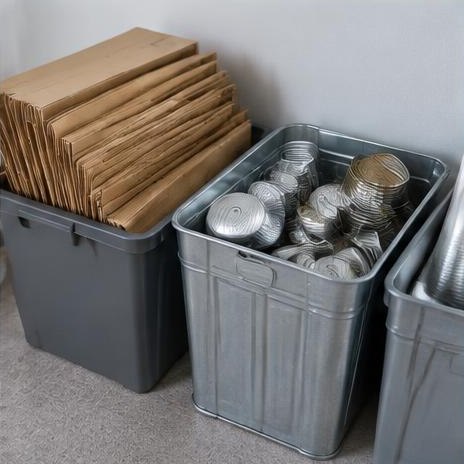
- Recycle: Paper, plastics, and metals that can be diverted from landfill.
- Dispose: Damaged, soiled, or unusable items that constitute "waste."
In probate clearance scenarios, a fifth category is often added for items that need formal valuation by an appraiser for inheritance tax purposes.
Phase 3: Managing Logistics and Waste Disposal
UK law is strict regarding waste. Every item removed from a property must be handled responsibly. When you hire a professional for how to clear a hoarder's house, they must provide a Waste Transfer Note. This document proves that the waste was taken to a licensed facility and not fly-tipped.
Using a specialist service ensures that:
- Hazardous materials are separated from general waste.
- Recyclable materials are processed correctly.
- Heavy furniture is lifted using safe manual handling techniques.
- Confidential paperwork is shredded to prevent identity theft.
Navigating Emotional Challenges
One of the most complex aspects of property clearance is the emotional weight it carries. Hoarding is often a symptom of underlying mental health challenges or a response to significant life trauma, such as bereavement. Approaching the task with compassion and dignity is not just a brand value; it is a practical necessity for success.
Working with the Occupant
If the person who lives in the home is present during the clearance, the process must move at a pace they can manage. Forcing the removal of items can lead to severe distress. Our approach involves building trust, explaining the safety benefits of clearing space, and involving the individual in small decisions where possible.
Dealing with Deceased Estate Clearance
When clearing the home of a late loved one, the process is often a journey through memories. This can be exhausting. It is perfectly normal to feel stuck. In these instances, probate clearance specialists can act as a neutral third party, helping to separate the "emotional clutter" from the truly significant keepsakes, allowing family members to focus on their grieving process rather than the logistics of waste removal.
Professional vs DIY: Which is Right for You?
Many people initial wonder if they can manage the clearance themselves to save costs. While this is possible for mild clutter, severe hoarding clearance usually requires professional support. Understanding the scale of the task is essential for making the right choice.
When to Call the Specialists
You should consider professional hoarder house clearance services if:
- The property has structural damage or floor-to-ceiling clutter.
- There are signs of animal hoarding or biological waste.
- The clearance needs to be completed quickly for a property sale or lease end.
- The emotional toll is preventing progress.
- You lack the physical strength or transport to move large volumes of waste.
The Benefits of Professional Clearance
Professional teams bring more than just muscle; they bring a system. They can often clear in two days what might take an individual two months. Furthermore, they are equipped to handle specialist sanitation needs, such as removing stubborn odours or preparing the property for thorough clearance. You can find more about these integrated solutions on our Hoarder Clearance services page.
Legal and Environmental Responsibilities in the UK
In the United Kingdom, the "Duty of Care" legislation means that property owners are legally responsible for where their waste ends up. If you hire an unlicensed "man with a van" and they fly-tip the contents of a hoarder's house, you could be held liable and face heavy fines.
Waste Carrier Registration
We ensure that every clearance we undertake is fully compliant with the Environment Agency regulations. This includes:
- Maintaining an up-to-date Waste Carrier Licence.
- Providing full documentation for all disposed materials.
- Prioritising "Zero to Landfill" policies through extensive recycling and donation partnerships.
Discreet and Respectful Service
We understand that there is often a stigma associated with hoarding. Our teams operate with the utmost discretion. We use plain, unmarked vehicles where requested and work efficiently to minimise the time spent on-site, ensuring that the clearance does not become a spectacle for the neighbourhood.
Advanced Insights: Structural and Health Considerations
Beyond the visible clutter, long-term hoarding can impact the "health" of the building itself. When we discuss how to clear a hoarder's house, we must also consider what lies beneath the layers.
Pest Infestation Management
Accumulated paper and textiles provide the perfect nesting ground for rodents and insects. During a clearance, it is common to uncover evidence of infestations. Professional teams are trained to identify these signs early, allowing for professional pest control measures to be integrated into the clearance timeline.
Air Quality and Respiratory Protection
Dust mites, fungal spores, and dried animal waste can become airborne the moment items are moved. This is why professional-grade respiratory protection is mandatory. Without it, those clearing the house risk "Hoarder's Lung" or other respiratory infections. We ensure that the property is ventilated as much as safety allows during the process.
Checklist: Reclaiming Your Property
To help you stay organised, use this checklist as you move through the steps to clear a hoarded property:
- [ ] Secure the Perimeter: Ensure all utilities (gas, water, electricity) are safe and that the property is structurally sound.
- [ ] Protect Yourself: Put on appropriate PPE, including gloves, masks, and eye protection.
- [ ] Define Your Goals: Are you clearing for a sale, for a return to habitation, or for a renovation?
- [ ] Book Waste Removal: Ensure you have a skip or a scheduled clearance team ready to take items away immediately. Leaving bags outside can attract vermin.
- [ ] Sort by Category: Don't look at the whole room; look at one cubic metre at a time.
- [ ] Secure Valuables: Set aside jewelry, cash, and legal documents in a locked box or off-site location.
- [ ] Final Thorough clearance: Once the clearance is complete, the property will require a thorough professional clear to remove the last traces of the hoarding situation.
Common Misconceptions About Hoarding Clearance
Understanding the reality of how to clear a hoarder's house requires debunking some common myths that often prevent people from seeking help.
Myth 1: "It’s just about being lazy."
Hoarding is a recognised mental health condition. It is not a choice or a sign of laziness. Approaching a clearance with this understanding changes the dynamic from one of frustration to one of restoration and support.
Myth 2: "You can just throw everything in a skip."
While it might seem faster, "skip-filling" without sorting often results in the loss of important legal documents, photographs, and items of high value. A professional hoarder house clearance is a surgical process, not a sledgehammer approach.
Myth 3: "The house will never be clear again."
Even the most severe hoarding situations can be resolved. With the right team, a house that has been inaccessible for decades can be restored to a functional, beautiful home. It takes time and expertise, but it is always possible.
Financial Considerations and Probate
The cost of clearing a hoarder's house varies depending on the volume of waste, the presence of hazardous materials, and the location. In probate clearance cases, the costs are typically handled by the estate. It is important to get a transparent quote that includes all disposal fees to avoid unexpected costs during an already stressful time.
We provide detailed, written estimates following an initial site visit or photographic assessment. This transparency helps executors and family members manage the financial aspects of the estate with confidence.